Lost in Translation: How Bingo Slang Shapes Pattern Wins and Player Errors Across House Variations
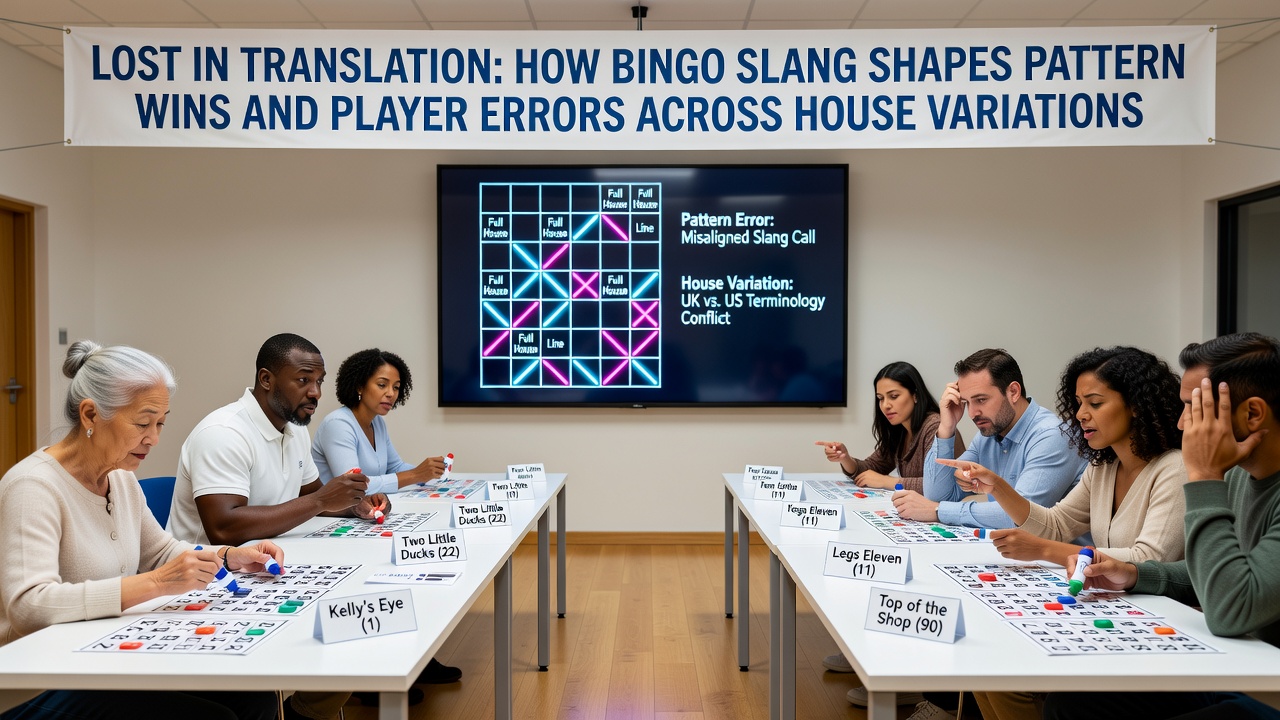 Bingo slang functions as a coded language that developed over decades in different regions, and it directly influences how players identify winning patterns while introducing specific types of marking mistakes. In 75-ball bingo halls across North America callers often use phrases like "B-7, the seven from heaven" whereas 90-ball games in other countries rely on rhymes such as "two little ducks" for 22. These verbal shortcuts create both speed and confusion depending on the house rules in play. Regional variations in calling styles produce measurable differences in error rates. Data compiled by the Nevada Gaming Control Board shows that halls using consistent slang report fewer missed lines compared with venues that rotate callers without standardized terminology. Players must translate each phrase into the corresponding number on their card, and any delay in that mental step increases the chance of overlooking a required pattern such as a diagonal or postage stamp.
Slang Variations by Game Type and Location
House variations determine which patterns count as wins, and slang intersects with those rules in ways that affect outcomes. In 75-ball games the focus stays on smaller patterns like four corners or the letter X, while 90-ball formats emphasize horizontal lines and full-house completion. Callers adapt their language accordingly, yet the same number can receive entirely different nicknames from one venue to the next. Observers note that Australian bingo sessions sometimes employ local references such as "kangaroo" for 32, creating an additional layer of translation for visitors from other countries.
Studies conducted by the University of Nevada, Reno gaming research program indicate that new players commit the highest number of recognition errors during their first three sessions when exposed to unfamiliar slang. The errors cluster around numbers with multiple possible nicknames, such as 90 which some callers describe as "top of the shop" while others simply state the digits. These inconsistencies become more pronounced when players travel between houses that follow different conventions.
Recognition Errors and Pattern Marking
Misheard or misinterpreted calls lead directly to unmarked numbers that later block a winning pattern. In one documented case from a Canadian provincial study, participants missed a horizontal line because the caller used "blind 90" for the number 90, a phrase unfamiliar to half the room. The resulting delay meant several cards contained the correct numbers yet remained incomplete on paper. Such incidents occur more frequently in live settings than in online platforms where numbers appear on screen without verbal translation.
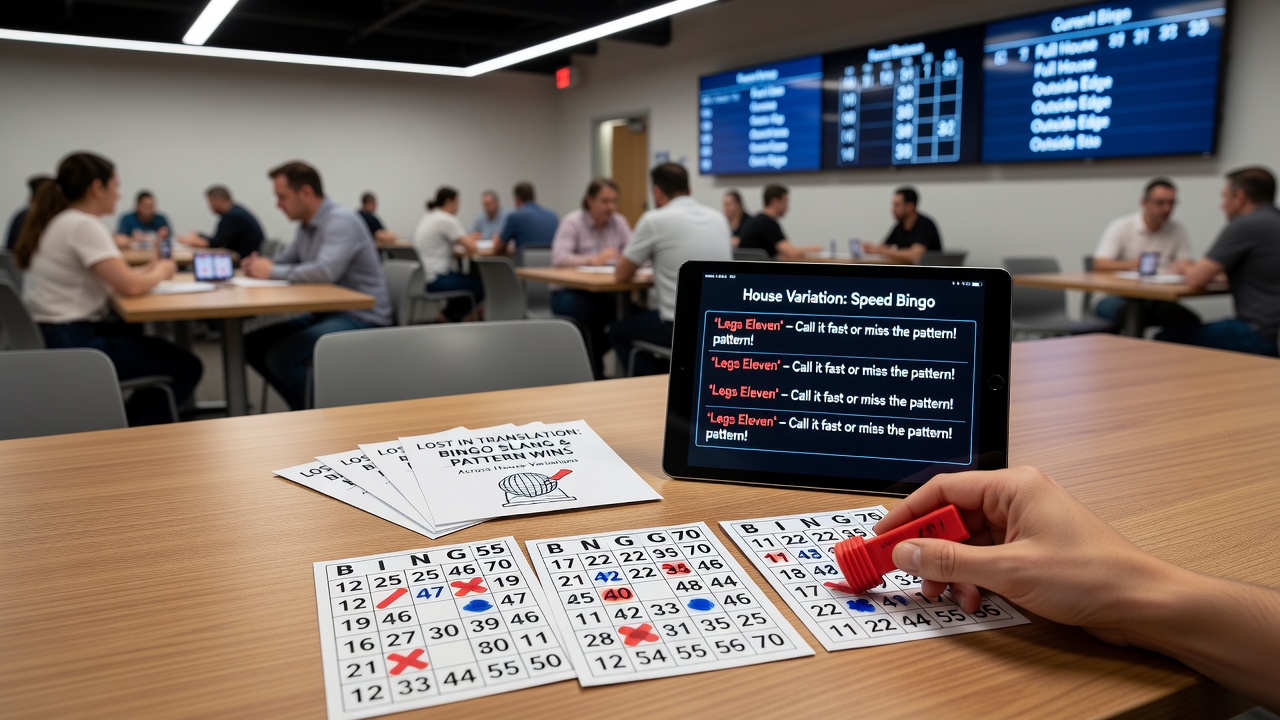
Layout differences compound the problem. Some houses arrange numbers in grids that group similar-sounding terms together, making visual confirmation harder after a slang call. Researchers from the Australian Gambling Research Centre found that error frequency rose by 18 percent when players switched between 75-ball and 90-ball layouts within the same week. The brain must simultaneously decode the phrase, locate the number, and verify the emerging pattern shape, leaving less margin for mistakes under time pressure.
Impact Across Different House Rules
Each bingo house sets its own pace and terminology, which produces distinct player behaviors. Venues that announce both the number and the slang phrase reduce errors compared with those that use slang exclusively. Industry reports from the European Gaming and Betting Association highlight that standardized training for callers correlates with fewer disputed wins. When a caller switches between "legs eleven" and "11" in the same game, players experience momentary uncertainty that can result in an unmarked square.
Online adaptations attempt to bridge these gaps by displaying both the number and a brief description, yet live streaming of traditional halls often retains the original slang. Players who follow multiple platforms must therefore maintain separate mental dictionaries, increasing cognitive load during pattern completion. Figures from regulatory filings in several jurisdictions reveal that disputed claims frequently cite "misunderstood call" as the reason a win went unclaimed.
Current Developments and Player Adaptation
June 2026 brings several regional bingo events that incorporate mixed-format sessions, requiring participants to adjust quickly between slang systems. Organizers have begun distributing glossaries at the door to address translation issues before play begins. These measures respond to documented patterns of errors observed in previous mixed-house tournaments where players from different regions competed under unified rules.
Training programs offered by some halls now include explicit lessons on common slang equivalents across game types. Participants learn that the same number may appear under multiple nicknames depending on the caller’s background, which reduces the time needed to mark cards accurately. Data collected after these sessions shows a decline in pattern-related disputes, although the improvement varies by individual experience level.
Conclusion
Bingo slang continues to shape both successful pattern wins and preventable errors as houses maintain their distinct vocabularies. The interaction between verbal tradition and physical card layout creates ongoing challenges for players navigating different formats. Regulatory bodies and research institutions track these dynamics through error reporting and player surveys, providing the factual basis for understanding how language influences outcomes across variations. As new events unfold in 2026, the need for clear communication between callers and participants remains central to consistent gameplay.